Transpilations-Optimierunge met SABRE
Verwendungsschätzung: winniger wie en Menutt op enem Heron r2 Prozessor (HINWIES: Dat es nor en Schätzung. Ding Laufzick kann anders sin.)
Hintergrund
Transpilation es ene wichtige Schritt en Qiskit, dä Quanteschaltkreise en Forme ömwandelt, die met spezieller Quantehardware kompatibel sin. Dat ömfasst zwei Hauptphasen: Qubit-Layout (Abbeldung logischer Qubits op physikalische Qubits op dem Jerät) un Gate-Routing (sicherstelle, dat Multi-Qubit-Gates de Jerätkonnektivität respektiere, indem mer bei Bedarf SWAP-Gates enfööt).
SABRE (SWAP-Based Bidirectional heuristic search algorithm) es en mächtiges Optimierungs-Werkzeug för Layout un Routing beides. Et es besonders effektiv för jroße Schaltkreise (100+ Qubits) un Jeräte met komplexe Coupling-Kaate, wie dem IBM® Heron, wo dat exponentielle Wachstum en de mögliche Qubit-Abbildunge effiziente Lösunge verlangt.
Woröm SABRE bruche?
SABRE minimiert de Zahl vun SWAP-Gates un reduziert de Schaltkreisdeefe, wat de Schaltkreisleistung op echter Hardware verbessert. Sing heuristische Herangehensweise mäht et ideal för fortgeschrittene Hardware un jroße, komplexe Schaltkreise. Jüngste Verbesserunge, die em LightSABRE-Algorithmus engeföht woodte, optimiere SABREs Leistung wigger un bede schnellere Laufzicke un winniger SWAP-Gates. Diese Verbesserunge maache et noch effektiver för jroße Schaltkreise.
Wat liers do hee
Dat Tutorial es en zwei Deele opjedelt:
- Liere, wie mer SABRE met Qiskit-Mustern för fortgeschrittene Optimierung jroßer Schaltkreise brucht.
- qiskit_serverless nutze, öm SABREs Potenzial för skalierbare un effiziente Transpilation ze maximiere.
Do wees:
- SABRE för Schaltkreise met 100+ Qubits optimiere un dobei Standardeinstellunge wie
optimization_level=3öbertreffe. - LightSABRE-Verbesserunge entdecke, die Laufzick verbessere un Gate-Zahle reduziere.
- Wichtige SABRE-Parameter (
swap_trials,layout_trials,max_iterations,heuristic) aanpasse, öm Schaltkreisqualität un Transpilations-Laufzick ze balanciere.
Aanforderunge
Bevör do met däm Tutorial aanfängst, stell secher, dat do Folgendes installiert häs:
- Qiskit SDK v1.0 oder später, met Visualisierungs-Unnerstötzung
- Qiskit Runtime v0.28 oder später (
pip install qiskit-ibm-runtime) - Serverless (
pip install qiskit-ibm-catalog qiskit_serverless)
Opstellung
# Added by doQumentation — required packages for this notebook
!pip install -q matplotlib numpy qiskit qiskit-ibm-catalog qiskit-ibm-runtime qiskit-serverless
from qiskit import QuantumCircuit
from qiskit.quantum_info import SparsePauliOp
from qiskit_ibm_catalog import QiskitServerless, QiskitFunction
from qiskit_ibm_runtime import QiskitRuntimeService
from qiskit_ibm_runtime import EstimatorOptions
from qiskit_ibm_runtime import EstimatorV2 as Estimator
from qiskit.transpiler import CouplingMap
from qiskit.transpiler.passes import SabreLayout, SabreSwap
from qiskit.transpiler.preset_passmanagers import generate_preset_pass_manager
import matplotlib.pyplot as plt
import numpy as np
import time
Deel I. SABRE met Qiskit-Mustern bruche
SABRE kann en Qiskit jebruch weede, öm Quanteschaltkreise ze optimiere, indem et sowohl Qubit-Layout wie och Gate-Routing handhaabt. En däm Abschnitt föhre mir dech durch et Minimal-Beispill vun SABRE met Qiskit-Mustern, met dem Hauptfokus op Schritt 2 vun der Optimierung.
Öm SABRE ze lofe ze brenge, bruchs do:
- En DAG (Directed Acyclic Graph)-Darstellung vun dingem Quanteschaltkreis.
- De Coupling-Kaate vum Backend, die aanjitt, wie Qubits physikalisch verbunge sin.
- Dat SABRE-Pass, dat den Algorithmus aanwendt, öm Layout un Routing ze optimiere.
För dä Deel konzentriere mir uns op et SabreLayout-Pass. Et fööt sowohl Layout- wie och Routing-Versuche durch un arbeit dran, dat effizienteste Aanfangslayout ze finge, während et de Zahl vun SWAP-Gates minimiert. Wichtig es, dat SabreLayout för sich allein intern sowohl Layout wie och Routing optimiert, indem et de Lösung speichert, die de winnichste SWAP-Gates dazudoht. Merk, dat mer beim Bruche von nur SabreLayout de Heuristik vun SABRE nit ändere künne, ävver mir künne de Zahl vun layout_trials aanpasse.
Schritt 1: Klassische Engänge op en Quanteproblem abbilden
En GHZ (Greenberger-Horne-Zeilinger)-Schaltkreis es en Quanteschaltkreis, dä ene verschränkte Zostand vorbereitet, wo all Qubits entweder em |0...0⟩- oder |1...1⟩-Zostand sin. Der GHZ-Zostand för Qubits weed mathematisch dajesteht als:
Et weed konstruiert, indem mer:
- En Hadamard-Gate op dat irschte Qubit aanwende, öm Superposition ze kreiere.
- En Serie vun CNOT-Gates aanwende, öm de üvvrige Qubits met dem irschte ze verschränke.
För dat Beispill konstruiere mir absichtlich ene Stern-Topologie-GHZ-Schaltkreis anstatt enem linearen. En der Stern-Topologie fungiert dat irschte Qubit als "Knotepunkt", un all andere Qubits weede direkt met ihm durch CNOT-Gates verschränkt. Diese Wahl es absichtlich, weil, während der lineare Topologie-GHZ-Zostand theoretisch en -Deefe op ener linearen Coupling-Kaate ohne SWAP-Gates emgesetzt weede kann, würd SABRE trivial en optimale Lösung finge, indem et ene 100-Qubit-GHZ-Schaltkreis op ene Delgraph vun der Heavy-Hex-Coupling-Kaate vum Backend abbildt.
Dä Stern-Topologie-GHZ-Schaltkreis stellt en bedütend schwierigeres Problem dar. Obwohl et emmer noch theoretisch en -Deefe ohne SWAP-Gates ömjesetzt weede kann, erfordert et Finge vun dä Lösung de Identifikation enem optimale Aanfangslayout, wat vill schwieriger es wäjen der nit-linearen Konnektivität vum Schaltkreis. Diese Topologie dient als bessere Testfall för SABREs Bewertung, weil et zeigt, wie Konfigurationsparameter Layout- un Routing-Leistung ongk komplexere Bedingunge beeflusse.
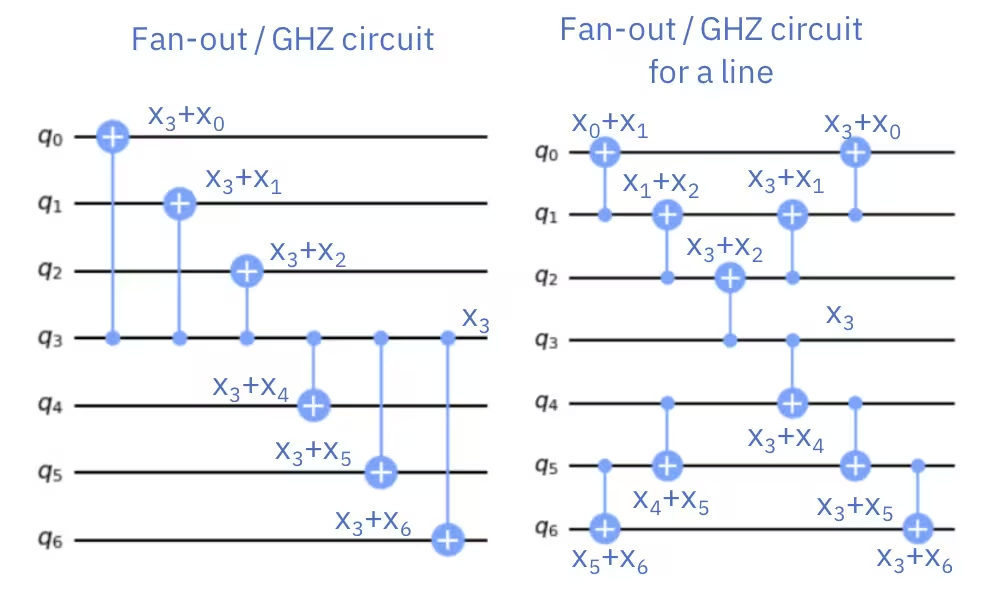
Bemerkensweht:
- Dat HighLevelSynthesis-Werkzeug kann de optimale -Deefe-Lösung för dä Stern-Topologie-GHZ-Schaltkreis ohne Enföhrung vun SWAP-Gates produziere, wie em Beld obe jezeigt.
- Alternativ kann dat StarPrerouting-Pass de Deefe wigger reduziere, indem et SABREs Routing-Entscheidunge leitet, obwohl et emmer noch einige SWAP-Gates enföhre künnt. Allerdings erhöht StarPrerouting de Laufzick un erfordert Integration en dä initiale Transpilationsprozess.
För de Zwecke vun däm Tutorial schließe mir sowohl HighLevelSynthesis wie och StarPrerouting us, öm de direkte Auswirkung vun SABRE-Konfiguration op Laufzick un Schaltkreisdeefe ze isoliere un ze beleuchte. Indem mir dä Erwartungswäht för jedes Qubit-Paar messe, analysiere mir:
- Wie jood SABRE SWAP-Gates un Schaltkreisdeefe reduziert.
- De Auswirkung vun dise Optimierunge op de Fidelität vum ömjesetzten Schaltkreis, wo Abweichunge vun Verschränkungsverloß aanzeige.!
# set seed for reproducibility
seed = 42
num_qubits = 110

# Create GHZ circuit
qc = QuantumCircuit(num_qubits)
qc.h(0)
for i in range(1, num_qubits):
    qc.cx(0, i)

qc.measure_all()
Als Nächstes weede mir de Operatore vun Interesse abbilden, öm dat Verhalte vum System ze bewerte. Speziell weede mir ZZ-Operatore zwischen Qubits bruche, öm ze ungersöke, wie de Verschränkung degradiert, wenn de Qubits wigger ussenein ligge. Diese Analyse es kritisch, weil Ungenauichkeite en de Erwartungswähte för wiet ussenein liggende Qubits de Auswirkung vun Rausche un Fehler en der Schaltkreisömsetzing offenbare künne. Indem mir diese Abweichunge studiere, gewenne mir Ensichte, wie jood dä Schaltkreis Verschränkung ongk verschiedene SABRE-Konfiguratione bewaahrt un wie effektiv SABRE de Auswirkung vun Hardwarebeschränkunge minimiert.
# ZZII...II, ZIZI...II, ... , ZIII...IZ
operator_strings = [
    "Z" + "I" * i + "Z" + "I" * (num_qubits - 2 - i)
    for i in range(num_qubits - 1)
]
print(operator_strings)
print(len(operator_strings))

operators = [SparsePauliOp(operator) for operator in operator_strings]
['ZZIIIIIIIIIIIIIIIIIIIIIIIIIIIIIIIIIIIIIIIIIIIIIIIIIIIIIIIIIIIIIIIIIIIIIIIIIIIIIIIIIIIIIIIIIIIIIIIIIIIIIIIIIIII', 'ZIZIIIIIIIIIIIIIIIIIIIIIIIIIIIIIIIIIIIIIIIIIIIIIIIIIIIIIIIIIIIIIIIIIIIIIIIIIIIIIIIIIIIIIIIIIIIIIIIIIIIIIIIIIII', 'ZIIZIIIIIIIIIIIIIIIIIIIIIIIIIIIIIIIIIIIIIIIIIIIIIIIIIIIIIIIIIIIIIIIIIIIIIIIIIIIIIIIIIIIIIIIIIIIIIIIIIIIIIIIIII', 'ZIIIZIIIIIIIIIIIIIIIIIIIIIIIIIIIIIIIIIIIIIIIIIIIIIIIIIIIIIIIIIIIIIIIIIIIIIIIIIIIIIIIIIIIIIIIIIIIIIIIIIIIIIIIII', 'ZIIIIZIIIIIIIIIIIIIIIIIIIIIIIIIIIIIIIIIIIIIIIIIIIIIIIIIIIIIIIIIIIIIIIIIIIIIIIIIIIIIIIIIIIIIIIIIIIIIIIIIIIIIIII', 'ZIIIIIZIIIIIIIIIIIIIIIIIIIIIIIIIIIIIIIIIIIIIIIIIIIIIIIIIIIIIIIIIIIIIIIIIIIIIIIIIIIIIIIIIIIIIIIIIIIIIIIIIIIIIII', 'ZIIIIIIZIIIIIIIIIIIIIIIIIIIIIIIIIIIIIIIIIIIIIIIIIIIIIIIIIIIIIIIIIIIIIIIIIIIIIIIIIIIIIIIIIIIIIIIIIIIIIIIIIIIIII', 'ZIIIIIIIZIIIIIIIIIIIIIIIIIIIIIIIIIIIIIIIIIIIIIIIIIIIIIIIIIIIIIIIIIIIIIIIIIIIIIIIIIIIIIIIIIIIIIIIIIIIIIIIIIIIII', 'ZIIIIIIIIZIIIIIIIIIIIIIIIIIIIIIIIIIIIIIIIIIIIIIIIIIIIIIIIIIIIIIIIIIIIIIIIIIIIIIIIIIIIIIIIIIIIIIIIIIIIIIIIIIIII', 'ZIIIIIIIIIZIIIIIIIIIIIIIIIIIIIIIIIIIIIIIIIIIIIIIIIIIIIIIIIIIIIIIIIIIIIIIIIIIIIIIIIIIIIIIIIIIIIIIIIIIIIIIIIIIII', 'ZIIIIIIIIIIZIIIIIIIIIIIIIIIIIIIIIIIIIIIIIIIIIIIIIIIIIIIIIIIIIIIIIIIIIIIIIIIIIIIIIIIIIIIIIIIIIIIIIIIIIIIIIIIIII', 'ZIIIIIIIIIIIZIIIIIIIIIIIIIIIIIIIIIIIIIIIIIIIIIIIIIIIIIIIIIIIIIIIIIIIIIIIIIIIIIIIIIIIIIIIIIIIIIIIIIIIIIIIIIIIII', 'ZIIIIIIIIIIIIZIIIIIIIIIIIIIIIIIIIIIIIIIIIIIIIIIIIIIIIIIIIIIIIIIIIIIIIIIIIIIIIIIIIIIIIIIIIIIIIIIIIIIIIIIIIIIIII', 'ZIIIIIIIIIIIIIZIIIIIIIIIIIIIIIIIIIIIIIIIIIIIIIIIIIIIIIIIIIIIIIIIIIIIIIIIIIIIIIIIIIIIIIIIIIIIIIIIIIIIIIIIIIIIII', 'ZIIIIIIIIIIIIIIZIIIIIIIIIIIIIIIIIIIIIIIIIIIIIIIIIIIIIIIIIIIIIIIIIIIIIIIIIIIIIIIIIIIIIIIIIIIIIIIIIIIIIIIIIIIIII', 'ZIIIIIIIIIIIIIIIZIIIIIIIIIIIIIIIIIIIIIIIIIIIIIIIIIIIIIIIIIIIIIIIIIIIIIIIIIIIIIIIIIIIIIIIIIIIIIIIIIIIIIIIIIIIII', 'ZIIIIIIIIIIIIIIIIZIIIIIIIIIIIIIIIIIIIIIIIIIIIIIIIIIIIIIIIIIIIIIIIIIIIIIIIIIIIIIIIIIIIIIIIIIIIIIIIIIIIIIIIIIIII', 'ZIIIIIIIIIIIIIIIIIZIIIIIIIIIIIIIIIIIIIIIIIIIIIIIIIIIIIIIIIIIIIIIIIIIIIIIIIIIIIIIIIIIIIIIIIIIIIIIIIIIIIIIIIIIII', 'ZIIIIIIIIIIIIIIIIIIZIIIIIIIIIIIIIIIIIIIIIIIIIIIIIIIIIIIIIIIIIIIIIIIIIIIIIIIIIIIIIIIIIIIIIIIIIIIIIIIIIIIIIIIIII', 'ZIIIIIIIIIIIIIIIIIIIZIIIIIIIIIIIIIIIIIIIIIIIIIIIIIIIIIIIIIIIIIIIIIIIIIIIIIIIIIIIIIIIIIIIIIIIIIIIIIIIIIIIIIIIII', 'ZIIIIIIIIIIIIIIIIIIIIZIIIIIIIIIIIIIIIIIIIIIIIIIIIIIIIIIIIIIIIIIIIIIIIIIIIIIIIIIIIIIIIIIIIIIIIIIIIIIIIIIIIIIIII', 'ZIIIIIIIIIIIIIIIIIIIIIZIIIIIIIIIIIIIIIIIIIIIIIIIIIIIIIIIIIIIIIIIIIIIIIIIIIIIIIIIIIIIIIIIIIIIIIIIIIIIIIIIIIIIII', 'ZIIIIIIIIIIIIIIIIIIIIIIZIIIIIIIIIIIIIIIIIIIIIIIIIIIIIIIIIIIIIIIIIIIIIIIIIIIIIIIIIIIIIIIIIIIIIIIIIIIIIIIIIIIIII', 'ZIIIIIIIIIIIIIIIIIIIIIIIZIIIIIIIIIIIIIIIIIIIIIIIIIIIIIIIIIIIIIIIIIIIIIIIIIIIIIIIIIIIIIIIIIIIIIIIIIIIIIIIIIIIII', 'ZIIIIIIIIIIIIIIIIIIIIIIIIZIIIIIIIIIIIIIIIIIIIIIIIIIIIIIIIIIIIIIIIIIIIIIIIIIIIIIIIIIIIIIIIIIIIIIIIIIIIIIIIIIIII', 'ZIIIIIIIIIIIIIIIIIIIIIIIIIZIIIIIIIIIIIIIIIIIIIIIIIIIIIIIIIIIIIIIIIIIIIIIIIIIIIIIIIIIIIIIIIIIIIIIIIIIIIIIIIIIII', 'ZIIIIIIIIIIIIIIIIIIIIIIIIIIZIIIIIIIIIIIIIIIIIIIIIIIIIIIIIIIIIIIIIIIIIIIIIIIIIIIIIIIIIIIIIIIIIIIIIIIIIIIIIIIIII', 'ZIIIIIIIIIIIIIIIIIIIIIIIIIIIZIIIIIIIIIIIIIIIIIIIIIIIIIIIIIIIIIIIIIIIIIIIIIIIIIIIIIIIIIIIIIIIIIIIIIIIIIIIIIIIII', 'ZIIIIIIIIIIIIIIIIIIIIIIIIIIIIZIIIIIIIIIIIIIIIIIIIIIIIIIIIIIIIIIIIIIIIIIIIIIIIIIIIIIIIIIIIIIIIIIIIIIIIIIIIIIIII', 'ZIIIIIIIIIIIIIIIIIIIIIIIIIIIIIZIIIIIIIIIIIIIIIIIIIIIIIIIIIIIIIIIIIIIIIIIIIIIIIIIIIIIIIIIIIIIIIIIIIIIIIIIIIIIII', 'ZIIIIIIIIIIIIIIIIIIIIIIIIIIIIIIZIIIIIIIIIIIIIIIIIIIIIIIIIIIIIIIIIIIIIIIIIIIIIIIIIIIIIIIIIIIIIIIIIIIIIIIIIIIIII', 'ZIIIIIIIIIIIIIIIIIIIIIIIIIIIIIIIZIIIIIIIIIIIIIIIIIIIIIIIIIIIIIIIIIIIIIIIIIIIIIIIIIIIIIIIIIIIIIIIIIIIIIIIIIIIII', 'ZIIIIIIIIIIIIIIIIIIIIIIIIIIIIIIIIZIIIIIIIIIIIIIIIIIIIIIIIIIIIIIIIIIIIIIIIIIIIIIIIIIIIIIIIIIIIIIIIIIIIIIIIIIIII', 'ZIIIIIIIIIIIIIIIIIIIIIIIIIIIIIIIIIZIIIIIIIIIIIIIIIIIIIIIIIIIIIIIIIIIIIIIIIIIIIIIIIIIIIIIIIIIIIIIIIIIIIIIIIIIII', 'ZIIIIIIIIIIIIIIIIIIIIIIIIIIIIIIIIIIZIIIIIIIIIIIIIIIIIIIIIIIIIIIIIIIIIIIIIIIIIIIIIIIIIIIIIIIIIIIIIIIIIIIIIIIIII', 'ZIIIIIIIIIIIIIIIIIIIIIIIIIIIIIIIIIIIZIIIIIIIIIIIIIIIIIIIIIIIIIIIIIIIIIIIIIIIIIIIIIIIIIIIIIIIIIIIIIIIIIIIIIIIII', 'ZIIIIIIIIIIIIIIIIIIIIIIIIIIIIIIIIIIIIZIIIIIIIIIIIIIIIIIIIIIIIIIIIIIIIIIIIIIIIIIIIIIIIIIIIIIIIIIIIIIIIIIIIIIIII', 'ZIIIIIIIIIIIIIIIIIIIIIIIIIIIIIIIIIIIIIZIIIIIIIIIIIIIIIIIIIIIIIIIIIIIIIIIIIIIIIIIIIIIIIIIIIIIIIIIIIIIIIIIIIIIII', 'ZIIIIIIIIIIIIIIIIIIIIIIIIIIIIIIIIIIIIIIZIIIIIIIIIIIIIIIIIIIIIIIIIIIIIIIIIIIIIIIIIIIIIIIIIIIIIIIIIIIIIIIIIIIIII', 'ZIIIIIIIIIIIIIIIIIIIIIIIIIIIIIIIIIIIIIIIZIIIIIIIIIIIIIIIIIIIIIIIIIIIIIIIIIIIIIIIIIIIIIIIIIIIIIIIIIIIIIIIIIIIII', 'ZIIIIIIIIIIIIIIIIIIIIIIIIIIIIIIIIIIIIIIIIZIIIIIIIIIIIIIIIIIIIIIIIIIIIIIIIIIIIIIIIIIIIIIIIIIIIIIIIIIIIIIIIIIIII', 'ZIIIIIIIIIIIIIIIIIIIIIIIIIIIIIIIIIIIIIIIIIZIIIIIIIIIIIIIIIIIIIIIIIIIIIIIIIIIIIIIIIIIIIIIIIIIIIIIIIIIIIIIIIIIII', 'ZIIIIIIIIIIIIIIIIIIIIIIIIIIIIIIIIIIIIIIIIIIZIIIIIIIIIIIIIIIIIIIIIIIIIIIIIIIIIIIIIIIIIIIIIIIIIIIIIIIIIIIIIIIIII', 'ZIIIIIIIIIIIIIIIIIIIIIIIIIIIIIIIIIIIIIIIIIIIZIIIIIIIIIIIIIIIIIIIIIIIIIIIIIIIIIIIIIIIIIIIIIIIIIIIIIIIIIIIIIIIII', 'ZIIIIIIIIIIIIIIIIIIIIIIIIIIIIIIIIIIIIIIIIIIIIZIIIIIIIIIIIIIIIIIIIIIIIIIIIIIIIIIIIIIIIIIIIIIIIIIIIIIIIIIIIIIIII', 'ZIIIIIIIIIIIIIIIIIIIIIIIIIIIIIIIIIIIIIIIIIIIIIZIIIIIIIIIIIIIIIIIIIIIIIIIIIIIIIIIIIIIIIIIIIIIIIIIIIIIIIIIIIIIII', 'ZIIIIIIIIIIIIIIIIIIIIIIIIIIIIIIIIIIIIIIIIIIIIIIZIIIIIIIIIIIIIIIIIIIIIIIIIIIIIIIIIIIIIIIIIIIIIIIIIIIIIIIIIIIIII', 'ZIIIIIIIIIIIIIIIIIIIIIIIIIIIIIIIIIIIIIIIIIIIIIIIZIIIIIIIIIIIIIIIIIIIIIIIIIIIIIIIIIIIIIIIIIIIIIIIIIIIIIIIIIIIII', 'ZIIIIIIIIIIIIIIIIIIIIIIIIIIIIIIIIIIIIIIIIIIIIIIIIZIIIIIIIIIIIIIIIIIIIIIIIIIIIIIIIIIIIIIIIIIIIIIIIIIIIIIIIIIIII', 'ZIIIIIIIIIIIIIIIIIIIIIIIIIIIIIIIIIIIIIIIIIIIIIIIIIZIIIIIIIIIIIIIIIIIIIIIIIIIIIIIIIIIIIIIIIIIIIIIIIIIIIIIIIIIII', 'ZIIIIIIIIIIIIIIIIIIIIIIIIIIIIIIIIIIIIIIIIIIIIIIIIIIZIIIIIIIIIIIIIIIIIIIIIIIIIIIIIIIIIIIIIIIIIIIIIIIIIIIIIIIIII', 'ZIIIIIIIIIIIIIIIIIIIIIIIIIIIIIIIIIIIIIIIIIIIIIIIIIIIZIIIIIIIIIIIIIIIIIIIIIIIIIIIIIIIIIIIIIIIIIIIIIIIIIIIIIIIII', 'ZIIIIIIIIIIIIIIIIIIIIIIIIIIIIIIIIIIIIIIIIIIIIIIIIIIIIZIIIIIIIIIIIIIIIIIIIIIIIIIIIIIIIIIIIIIIIIIIIIIIIIIIIIIIII', 'ZIIIIIIIIIIIIIIIIIIIIIIIIIIIIIIIIIIIIIIIIIIIIIIIIIIIIIZIIIIIIIIIIIIIIIIIIIIIIIIIIIIIIIIIIIIIIIIIIIIIIIIIIIIIII', 'ZIIIIIIIIIIIIIIIIIIIIIIIIIIIIIIIIIIIIIIIIIIIIIIIIIIIIIIZIIIIIIIIIIIIIIIIIIIIIIIIIIIIIIIIIIIIIIIIIIIIIIIIIIIIII', 'ZIIIIIIIIIIIIIIIIIIIIIIIIIIIIIIIIIIIIIIIIIIIIIIIIIIIIIIIZIIIIIIIIIIIIIIIIIIIIIIIIIIIIIIIIIIIIIIIIIIIIIIIIIIIII', 'ZIIIIIIIIIIIIIIIIIIIIIIIIIIIIIIIIIIIIIIIIIIIIIIIIIIIIIIIIZIIIIIIIIIIIIIIIIIIIIIIIIIIIIIIIIIIIIIIIIIIIIIIIIIIII', 'ZIIIIIIIIIIIIIIIIIIIIIIIIIIIIIIIIIIIIIIIIIIIIIIIIIIIIIIIIIZIIIIIIIIIIIIIIIIIIIIIIIIIIIIIIIIIIIIIIIIIIIIIIIIIII', 'ZIIIIIIIIIIIIIIIIIIIIIIIIIIIIIIIIIIIIIIIIIIIIIIIIIIIIIIIIIIZIIIIIIIIIIIIIIIIIIIIIIIIIIIIIIIIIIIIIIIIIIIIIIIIII', 'ZIIIIIIIIIIIIIIIIIIIIIIIIIIIIIIIIIIIIIIIIIIIIIIIIIIIIIIIIIIIZIIIIIIIIIIIIIIIIIIIIIIIIIIIIIIIIIIIIIIIIIIIIIIIII', 'ZIIIIIIIIIIIIIIIIIIIIIIIIIIIIIIIIIIIIIIIIIIIIIIIIIIIIIIIIIIIIZIIIIIIIIIIIIIIIIIIIIIIIIIIIIIIIIIIIIIIIIIIIIIIII', 'ZIIIIIIIIIIIIIIIIIIIIIIIIIIIIIIIIIIIIIIIIIIIIIIIIIIIIIIIIIIIIIZIIIIIIIIIIIIIIIIIIIIIIIIIIIIIIIIIIIIIIIIIIIIIII', 'ZIIIIIIIIIIIIIIIIIIIIIIIIIIIIIIIIIIIIIIIIIIIIIIIIIIIIIIIIIIIIIIZIIIIIIIIIIIIIIIIIIIIIIIIIIIIIIIIIIIIIIIIIIIIII', 'ZIIIIIIIIIIIIIIIIIIIIIIIIIIIIIIIIIIIIIIIIIIIIIIIIIIIIIIIIIIIIIIIZIIIIIIIIIIIIIIIIIIIIIIIIIIIIIIIIIIIIIIIIIIIII', 'ZIIIIIIIIIIIIIIIIIIIIIIIIIIIIIIIIIIIIIIIIIIIIIIIIIIIIIIIIIIIIIIIIZIIIIIIIIIIIIIIIIIIIIIIIIIIIIIIIIIIIIIIIIIIII', 'ZIIIIIIIIIIIIIIIIIIIIIIIIIIIIIIIIIIIIIIIIIIIIIIIIIIIIIIIIIIIIIIIIIZIIIIIIIIIIIIIIIIIIIIIIIIIIIIIIIIIIIIIIIIIII', 'ZIIIIIIIIIIIIIIIIIIIIIIIIIIIIIIIIIIIIIIIIIIIIIIIIIIIIIIIIIIIIIIIIIIZIIIIIIIIIIIIIIIIIIIIIIIIIIIIIIIIIIIIIIIIII', 'ZIIIIIIIIIIIIIIIIIIIIIIIIIIIIIIIIIIIIIIIIIIIIIIIIIIIIIIIIIIIIIIIIIIIZIIIIIIIIIIIIIIIIIIIIIIIIIIIIIIIIIIIIIIIII', 'ZIIIIIIIIIIIIIIIIIIIIIIIIIIIIIIIIIIIIIIIIIIIIIIIIIIIIIIIIIIIIIIIIIIIIZIIIIIIIIIIIIIIIIIIIIIIIIIIIIIIIIIIIIIIII', 'ZIIIIIIIIIIIIIIIIIIIIIIIIIIIIIIIIIIIIIIIIIIIIIIIIIIIIIIIIIIIIIIIIIIIIIZIIIIIIIIIIIIIIIIIIIIIIIIIIIIIIIIIIIIIII', 'ZIIIIIIIIIIIIIIIIIIIIIIIIIIIIIIIIIIIIIIIIIIIIIIIIIIIIIIIIIIIIIIIIIIIIIIZIIIIIIIIIIIIIIIIIIIIIIIIIIIIIIIIIIIIII', 'ZIIIIIIIIIIIIIIIIIIIIIIIIIIIIIIIIIIIIIIIIIIIIIIIIIIIIIIIIIIIIIIIIIIIIIIIZIIIIIIIIIIIIIIIIIIIIIIIIIIIIIIIIIIIII', 'ZIIIIIIIIIIIIIIIIIIIIIIIIIIIIIIIIIIIIIIIIIIIIIIIIIIIIIIIIIIIIIIIIIIIIIIIIZIIIIIIIIIIIIIIIIIIIIIIIIIIIIIIIIIIII', 'ZIIIIIIIIIIIIIIIIIIIIIIIIIIIIIIIIIIIIIIIIIIIIIIIIIIIIIIIIIIIIIIIIIIIIIIIIIZIIIIIIIIIIIIIIIIIIIIIIIIIIIIIIIIIII', 'ZIIIIIIIIIIIIIIIIIIIIIIIIIIIIIIIIIIIIIIIIIIIIIIIIIIIIIIIIIIIIIIIIIIIIIIIIIIZIIIIIIIIIIIIIIIIIIIIIIIIIIIIIIIIII', 'ZIIIIIIIIIIIIIIIIIIIIIIIIIIIIIIIIIIIIIIIIIIIIIIIIIIIIIIIIIIIIIIIIIIIIIIIIIIIZIIIIIIIIIIIIIIIIIIIIIIIIIIIIIIIII', 'ZIIIIIIIIIIIIIIIIIIIIIIIIIIIIIIIIIIIIIIIIIIIIIIIIIIIIIIIIIIIIIIIIIIIIIIIIIIIIZIIIIIIIIIIIIIIIIIIIIIIIIIIIIIIII', 'ZIIIIIIIIIIIIIIIIIIIIIIIIIIIIIIIIIIIIIIIIIIIIIIIIIIIIIIIIIIIIIIIIIIIIIIIIIIIIIZIIIIIIIIIIIIIIIIIIIIIIIIIIIIIII', 'ZIIIIIIIIIIIIIIIIIIIIIIIIIIIIIIIIIIIIIIIIIIIIIIIIIIIIIIIIIIIIIIIIIIIIIIIIIIIIIIZIIIIIIIIIIIIIIIIIIIIIIIIIIIIII', 'ZIIIIIIIIIIIIIIIIIIIIIIIIIIIIIIIIIIIIIIIIIIIIIIIIIIIIIIIIIIIIIIIIIIIIIIIIIIIIIIIZIIIIIIIIIIIIIIIIIIIIIIIIIIIII', 'ZIIIIIIIIIIIIIIIIIIIIIIIIIIIIIIIIIIIIIIIIIIIIIIIIIIIIIIIIIIIIIIIIIIIIIIIIIIIIIIIIZIIIIIIIIIIIIIIIIIIIIIIIIIIII', 'ZIIIIIIIIIIIIIIIIIIIIIIIIIIIIIIIIIIIIIIIIIIIIIIIIIIIIIIIIIIIIIIIIIIIIIIIIIIIIIIIIIZIIIIIIIIIIIIIIIIIIIIIIIIIII', 'ZIIIIIIIIIIIIIIIIIIIIIIIIIIIIIIIIIIIIIIIIIIIIIIIIIIIIIIIIIIIIIIIIIIIIIIIIIIIIIIIIIIZIIIIIIIIIIIIIIIIIIIIIIIIII', 'ZIIIIIIIIIIIIIIIIIIIIIIIIIIIIIIIIIIIIIIIIIIIIIIIIIIIIIIIIIIIIIIIIIIIIIIIIIIIIIIIIIIIZIIIIIIIIIIIIIIIIIIIIIIIII', 'ZIIIIIIIIIIIIIIIIIIIIIIIIIIIIIIIIIIIIIIIIIIIIIIIIIIIIIIIIIIIIIIIIIIIIIIIIIIIIIIIIIIIIZIIIIIIIIIIIIIIIIIIIIIIII', 'ZIIIIIIIIIIIIIIIIIIIIIIIIIIIIIIIIIIIIIIIIIIIIIIIIIIIIIIIIIIIIIIIIIIIIIIIIIIIIIIIIIIIIIZIIIIIIIIIIIIIIIIIIIIIII', 'ZIIIIIIIIIIIIIIIIIIIIIIIIIIIIIIIIIIIIIIIIIIIIIIIIIIIIIIIIIIIIIIIIIIIIIIIIIIIIIIIIIIIIIIZIIIIIIIIIIIIIIIIIIIIII', 'ZIIIIIIIIIIIIIIIIIIIIIIIIIIIIIIIIIIIIIIIIIIIIIIIIIIIIIIIIIIIIIIIIIIIIIIIIIIIIIIIIIIIIIIIZIIIIIIIIIIIIIIIIIIIII', 'ZIIIIIIIIIIIIIIIIIIIIIIIIIIIIIIIIIIIIIIIIIIIIIIIIIIIIIIIIIIIIIIIIIIIIIIIIIIIIIIIIIIIIIIIIZIIIIIIIIIIIIIIIIIIII', 'ZIIIIIIIIIIIIIIIIIIIIIIIIIIIIIIIIIIIIIIIIIIIIIIIIIIIIIIIIIIIIIIIIIIIIIIIIIIIIIIIIIIIIIIIIIZIIIIIIIIIIIIIIIIIII', 'ZIIIIIIIIIIIIIIIIIIIIIIIIIIIIIIIIIIIIIIIIIIIIIIIIIIIIIIIIIIIIIIIIIIIIIIIIIIIIIIIIIIIIIIIIIIZIIIIIIIIIIIIIIIIII', 'ZIIIIIIIIIIIIIIIIIIIIIIIIIIIIIIIIIIIIIIIIIIIIIIIIIIIIIIIIIIIIIIIIIIIIIIIIIIIIIIIIIIIIIIIIIIIZIIIIIIIIIIIIIIIII', 'ZIIIIIIIIIIIIIIIIIIIIIIIIIIIIIIIIIIIIIIIIIIIIIIIIIIIIIIIIIIIIIIIIIIIIIIIIIIIIIIIIIIIIIIIIIIIIZIIIIIIIIIIIIIIII', 'ZIIIIIIIIIIIIIIIIIIIIIIIIIIIIIIIIIIIIIIIIIIIIIIIIIIIIIIIIIIIIIIIIIIIIIIIIIIIIIIIIIIIIIIIIIIIIIZIIIIIIIIIIIIIII', 'ZIIIIIIIIIIIIIIIIIIIIIIIIIIIIIIIIIIIIIIIIIIIIIIIIIIIIIIIIIIIIIIIIIIIIIIIIIIIIIIIIIIIIIIIIIIIIIIZIIIIIIIIIIIIII', 'ZIIIIIIIIIIIIIIIIIIIIIIIIIIIIIIIIIIIIIIIIIIIIIIIIIIIIIIIIIIIIIIIIIIIIIIIIIIIIIIIIIIIIIIIIIIIIIIIZIIIIIIIIIIIII', 'ZIIIIIIIIIIIIIIIIIIIIIIIIIIIIIIIIIIIIIIIIIIIIIIIIIIIIIIIIIIIIIIIIIIIIIIIIIIIIIIIIIIIIIIIIIIIIIIIIZIIIIIIIIIIII', 'ZIIIIIIIIIIIIIIIIIIIIIIIIIIIIIIIIIIIIIIIIIIIIIIIIIIIIIIIIIIIIIIIIIIIIIIIIIIIIIIIIIIIIIIIIIIIIIIIIIZIIIIIIIIIII', 'ZIIIIIIIIIIIIIIIIIIIIIIIIIIIIIIIIIIIIIIIIIIIIIIIIIIIIIIIIIIIIIIIIIIIIIIIIIIIIIIIIIIIIIIIIIIIIIIIIIIZIIIIIIIIII', 'ZIIIIIIIIIIIIIIIIIIIIIIIIIIIIIIIIIIIIIIIIIIIIIIIIIIIIIIIIIIIIIIIIIIIIIIIIIIIIIIIIIIIIIIIIIIIIIIIIIIIZIIIIIIIII', 'ZIIIIIIIIIIIIIIIIIIIIIIIIIIIIIIIIIIIIIIIIIIIIIIIIIIIIIIIIIIIIIIIIIIIIIIIIIIIIIIIIIIIIIIIIIIIIIIIIIIIIZIIIIIIII', 'ZIIIIIIIIIIIIIIIIIIIIIIIIIIIIIIIIIIIIIIIIIIIIIIIIIIIIIIIIIIIIIIIIIIIIIIIIIIIIIIIIIIIIIIIIIIIIIIIIIIIIIZIIIIIII', 'ZIIIIIIIIIIIIIIIIIIIIIIIIIIIIIIIIIIIIIIIIIIIIIIIIIIIIIIIIIIIIIIIIIIIIIIIIIIIIIIIIIIIIIIIIIIIIIIIIIIIIIIZIIIIII', 'ZIIIIIIIIIIIIIIIIIIIIIIIIIIIIIIIIIIIIIIIIIIIIIIIIIIIIIIIIIIIIIIIIIIIIIIIIIIIIIIIIIIIIIIIIIIIIIIIIIIIIIIIZIIIII', 'ZIIIIIIIIIIIIIIIIIIIIIIIIIIIIIIIIIIIIIIIIIIIIIIIIIIIIIIIIIIIIIIIIIIIIIIIIIIIIIIIIIIIIIIIIIIIIIIIIIIIIIIIIZIIII', 'ZIIIIIIIIIIIIIIIIIIIIIIIIIIIIIIIIIIIIIIIIIIIIIIIIIIIIIIIIIIIIIIIIIIIIIIIIIIIIIIIIIIIIIIIIIIIIIIIIIIIIIIIIIZIII', 'ZIIIIIIIIIIIIIIIIIIIIIIIIIIIIIIIIIIIIIIIIIIIIIIIIIIIIIIIIIIIIIIIIIIIIIIIIIIIIIIIIIIIIIIIIIIIIIIIIIIIIIIIIIIZII', 'ZIIIIIIIIIIIIIIIIIIIIIIIIIIIIIIIIIIIIIIIIIIIIIIIIIIIIIIIIIIIIIIIIIIIIIIIIIIIIIIIIIIIIIIIIIIIIIIIIIIIIIIIIIIIZI', 'ZIIIIIIIIIIIIIIIIIIIIIIIIIIIIIIIIIIIIIIIIIIIIIIIIIIIIIIIIIIIIIIIIIIIIIIIIIIIIIIIIIIIIIIIIIIIIIIIIIIIIIIIIIIIIZ']
109
Schritt 2: Problem för Quantehardware-Ömsetung optimiere
En däm Schritt konzentriere mir uns drop, dat Schaltkreislayout för de Ömsetung op enem spezifische Quantehardware-Jerät met 127 Qubits ze optimiere. Dat es der Hauptfokus vum Tutorial, weil mir SABRE-Optimierunge un Transpilation durchföhre, öm de beste Schaltkreisleistung ze erziehle. Met dem SabreLayout-Pass bestimme mir en Aanfangs-Qubit-Abbildung, die dä Bedarf för SWAP-Gates beim Routing minimiert. Indem mir de coupling_map vum Zeel-Backend üvvergäve, passt sich SabreLayout de Layoutbeschränkunge vum Jerät aan.
Mir weede generate_preset_pass_manager met optimization_level=3 för dä Transpilationsprozess bruche un dat SabreLayout-Pass met verschiedene Konfiguratione aanpasse. Dat Ziel es et, en Opstellung ze finge, die ene transpilierte Schaltkreis met de winnichste Jrößß un/oder Deefe produziert, un dobei de Auswirkung vun SABRE-Optimierunge zeigt.
Woröm sin Schaltkreisjröße un Deefe wichtig?
- Winniger Jröße (Gate-Zahl): Reduziert de Zahl vun Operatione un minimiert de Jeleehenheete för Fehleranhäufung.
- Winniger Deefe: Verkööt de jesampte Ömsetungszick, wat kritisch es, öm Dekohärenz ze vermigge un Quantezustandsfidelität ze bewaahre.
Indem mir diese Metrike optimiere, verbessere mir de Zuverlässichkeit un Ömsetungsgenauichkeit vum Schaltkreis op rauschiger Quantehardware. Wähl dat Backend us.
service = QiskitRuntimeService()
# backend = service.least_busy(
#    operational=True, simulator=False, min_num_qubits=127
# )
backend = service.backend("ibm_boston")
print(f"Using backend: {backend.name}")
Using backend: ibm_boston
Öm de Auswirkung vun verschiedene Konfiguratione op Schaltkreisoptimierung ze bewerte, weede mir drei Pass-Manager erstelle, jeder met einzigartige Einstellunge för dat SabreLayout-Pass. Diese Konfiguratione helfe, dä Kompromiss zwischen Schaltkreisqualität un Transpilationszick ze analysiere.
Wichtige Parameter
max_iterations: De Zahl vun Vörwärts-Röckwärts-Routing-Iteratione, öm dat Layout ze verfeinere un Routing-Koste ze reduziere.layout_trials: De Zahl vun zufällige Aanfangslayouts, die jetestet weede, wobei dat usgewählt weed, dat SWAP-Gates minimiert.swap_trials: De Zahl vun Routing-Versuche för jedes Layout, die Gate-Platzierung för bessere Routing verfeinere.
Erhöh layout_trials un swap_trials, öm en gründlichere Optimierung durchzeföhre, op Koste vun erhöhter Transpilationszick.
Konfiguratione en däm Tutorial
-
pm_1: Standardeinstellunge metoptimization_level=3.max_iterations=4layout_trials=20swap_trials=20
-
pm_2: Erhöht de Zahl vun Versuche för bessere Erkundung.max_iterations=4layout_trials=200swap_trials=200
-
pm_3: Erweidertpm_2, indem et de Zahl vun Iteratione för wigger Verfeinerung erhöht.max_iterations=8layout_trials=200swap_trials=200
Indem mir de Ergebnisse vun dise Konfiguratione verglieche, wolle mir bestimme, welch dat beste Jlichgewicht zwischen Schaltkreisqualität (zum Beispill Jröße un Deefe) un Berechnungskoste erreicht.
# Get the coupling map from the backend
cmap = CouplingMap(backend().configuration().coupling_map)

# Create the SabreLayout passes for the custom configurations
sl_2 = SabreLayout(
    coupling_map=cmap,
    seed=seed,
    max_iterations=4,
    layout_trials=200,
    swap_trials=200,
)
sl_3 = SabreLayout(
    coupling_map=cmap,
    seed=seed,
    max_iterations=8,
    layout_trials=200,
    swap_trials=200,
)

# Create the pass managers, need to first create then configure the SabreLayout passes
pm_1 = generate_preset_pass_manager(
    optimization_level=3, backend=backend, seed_transpiler=seed
)
pm_2 = generate_preset_pass_manager(
    optimization_level=3, backend=backend, seed_transpiler=seed
)
pm_3 = generate_preset_pass_manager(
    optimization_level=3, backend=backend, seed_transpiler=seed
)
Jetz künne mir dat SabreLayout-Pass en de benutzerdefinierte Pass-Manager konfiguriere. Doför wesse mir, dat för dä Standard-generate_preset_pass_manager op optimization_level=3 dat SabreLayout-Pass op Index 2 es, weil SabreLayout no SetLayout un VF2Layout-Passes kütt. Mir künne op dat Pass zugrieffe un sing Parameter modifiziere.
pm_2.layout.replace(index=2, passes=sl_2)
pm_3.layout.replace(index=2, passes=sl_3)
Met jedem konfigurierte Pass-Manager weede mir jetz dä Transpilationsprozess för jedes usföhre. Öm Ergebnisse ze vergliche, weede mir wichtige Metrike verfolge, daronger de Transpilationszick, de Deefe vum Schaltkreis (jemesse als Zwei-Qubit-Gate-Deefe) un de jesampte Zahl vun Gates en de transpilierte Schaltkreise
# Transpile the circuit with each pass manager and measure the time
t0 = time.time()
tqc_1 = pm_1.run(qc)
t1 = time.time() - t0
t0 = time.time()
tqc_2 = pm_2.run(qc)
t2 = time.time() - t0
t0 = time.time()
tqc_3 = pm_3.run(qc)
t3 = time.time() - t0

# Obtain the depths and the total number of gates (circuit size)
depth_1 = tqc_1.depth(lambda x: x.operation.num_qubits == 2)
depth_2 = tqc_2.depth(lambda x: x.operation.num_qubits == 2)
depth_3 = tqc_3.depth(lambda x: x.operation.num_qubits == 2)
size_1 = tqc_1.size()
size_2 = tqc_2.size()
size_3 = tqc_3.size()

# Transform the observables to match the backend's ISA
operators_list_1 = [op.apply_layout(tqc_1.layout) for op in operators]
operators_list_2 = [op.apply_layout(tqc_2.layout) for op in operators]
operators_list_3 = [op.apply_layout(tqc_3.layout) for op in operators]

# Compute improvements compared to pass manager 1 (default)
depth_improvement_2 = ((depth_1 - depth_2) / depth_1) * 100
depth_improvement_3 = ((depth_1 - depth_3) / depth_1) * 100
size_improvement_2 = ((size_1 - size_2) / size_1) * 100
size_improvement_3 = ((size_1 - size_3) / size_1) * 100
time_increase_2 = ((t2 - t1) / t1) * 100
time_increase_3 = ((t3 - t1) / t1) * 100

print(
    f"Pass manager 1 (4,20,20)  : Depth {depth_1}, Size {size_1}, Time {t1:.4f} s"
)
print(
    f"Pass manager 2 (4,200,200): Depth {depth_2}, Size {size_2}, Time {t2:.4f} s"
)
print(f"  - Depth improvement: {depth_improvement_2:.2f}%")
print(f"  - Size improvement: {size_improvement_2:.2f}%")
print(f"  - Time increase: {time_increase_2:.2f}%")
print(
    f"Pass manager 3 (8,200,200): Depth {depth_3}, Size {size_3}, Time {t3:.4f} s"
)
print(f"  - Depth improvement: {depth_improvement_3:.2f}%")
print(f"  - Size improvement: {size_improvement_3:.2f}%")
print(f"  - Time increase: {time_increase_3:.2f}%")
Pass manager 1 (4,20,20)  : Depth 439, Size 2346, Time 0.5775 s
Pass manager 2 (4,200,200): Depth 395, Size 2070, Time 3.9927 s
  - Depth improvement: 10.02%
  - Size improvement: 11.76%
  - Time increase: 591.43%
Pass manager 3 (8,200,200): Depth 375, Size 1873, Time 2.3079 s
  - Depth improvement: 14.58%
  - Size improvement: 20.16%
  - Time increase: 299.67%
De Ergebnisse zeige, dat de Erhöhung vun der Zahl vun Versuche (layout_trials un swap_trials) de Schaltkreisqualität erheblich verbessere kann, indem se sowohl Deefe wie och Jröße reduziere. Allerdings kütt diese Verbesserung oft op Koste vun erhöhter Laufzick wäjen der zusätzliche Berechnung, die nötig es, öm mih potenzielle Layouts un Routing-Pfade ze erkunde.
De Erhöhung vun max_iterations kann de Optimierung wigger verbessere, indem et dat Layout durch mih Vörwärts-Röckwärts-Routing-Zyklen verfeinert. En däm Fall föhrt de Erhöhung vun max_iterations zur bedütendste Reduzierung vun Schaltkreisdeefe un -jröße, un reduziert sojar de Laufzick em Verglich zu pm_2, wahrscheinlich durch Stromlinienförmigung nachfolgende Optimierungs-Phasen. Et es wichtig ze bemerke, dat de Effektivität vun der Erhöhung vun max_iterations erheblich je no Schaltkreis variiere kann. Während mih Iteratione bessere Layout- un Routing-Wahle ergäve künne, bede se keine Garantie un hänge stark vun der Struktur vum Schaltkreis un der Komplexität vun de Konnektivitätsbeschränkunge av
# Plot the results of the metrics
times = [t1, t2, t3]
depths = [depth_1, depth_2, depth_3]
sizes = [size_1, size_2, size_3]
pm_names = [
    "pm_1 (4 iter, 20 trials)",
    "pm_2 (4 iter, 200 trials)",
    "pm_3 (8 iter, 200 trials)",
]
colors = plt.cm.viridis(np.linspace(0.2, 0.8, len(pm_names)))

# Create a figure with three subplots
fig, axs = plt.subplots(3, 1, figsize=(6, 9), sharex=True)
axs[0].bar(pm_names, times, color=colors)
axs[0].set_ylabel("Time (s)", fontsize=12)
axs[0].set_title("Transpilation Time", fontsize=14)
axs[0].grid(axis="y", linestyle="--", alpha=0.7)
axs[1].bar(pm_names, depths, color=colors)
axs[1].set_ylabel("Depth", fontsize=12)
axs[1].set_title("Circuit Depth", fontsize=14)
axs[1].grid(axis="y", linestyle="--", alpha=0.7)
axs[2].bar(pm_names, sizes, color=colors)
axs[2].set_ylabel("Size", fontsize=12)
axs[2].set_title("Circuit Size", fontsize=14)
axs[2].set_xticks(range(len(pm_names)))
axs[2].set_xticklabels(pm_names, fontsize=10, rotation=15)
axs[2].grid(axis="y", linestyle="--", alpha=0.7)

# Add some spacing between subplots
plt.tight_layout()
plt.show()

Schritt 3: Met Qiskit-Primitives ömsetze
En däm Schritt bruche mir dat Estimator-Primitive, öm de Erwartungswähte för de ZZ-Operatore ze berechne, un bewerte de Verschränkung un Ömsetungsqualität vun de transpilierte Schaltkreise. Öm uns aan typische Benutzer-Workflows aanzupasse, ovvergäve mir dä Job för de Ömsetung un wende Fehlerungerdrückung met dynamischer Entkopplung aan, ener Technik, die Dekohärenz mildert, indem se Gate-Sequenze enfööt, öm Qubit-Zustände ze erhalte. Zusätzlich lääje mir en Resilience-Level fess, öm Rausche entjegenzewirke, wobei höhere Levels jenauere Ergebnisse op Koste vun erhöhter Verarbeitungszick bede. Dä Aansatz bewertet de Leistung vun jeder Pass-Manager-Konfiguration ongk realistische Ömsetungsbedingunge.
options = EstimatorOptions()
options.resilience_level = 2
options.dynamical_decoupling.enable = True
options.dynamical_decoupling.sequence_type = "XY4"

# Create an Estimator object
estimator = Estimator(backend, options=options)
# Submit the circuit to Estimator
job_1 = estimator.run([(tqc_1, operators_list_1)])
job_1_id = job_1.job_id()
print(job_1_id)

job_2 = estimator.run([(tqc_2, operators_list_2)])
job_2_id = job_2.job_id()
print(job_2_id)

job_3 = estimator.run([(tqc_3, operators_list_3)])
job_3_id = job_3.job_id()
print(job_3_id)
d5k0qs7853es738dab6g
d5k0qsf853es738dab70
d5k0qsf853es738dab7g
# Run the jobs
result_1 = job_1.result()[0]
print("Job 1 done")
result_2 = job_2.result()[0]
print("Job 2 done")
result_3 = job_3.result()[0]
print("Job 3 done")
Job 1 done
Job 2 done
Job 3 done
Schritt 4: Nohverarbeitung un Ergebnis em gewünschte klassische Format zoröckgäve
Sobald dä Job abgeschlosse es, analysiere mir de Ergebnisse, indem mir de Erwartungswähte för jedes Qubit plotte. En ener ideale Simulation sollte all -Wähte 1 sin un perfekte Verschränkung övver de Qubits widerspiegele. Allerdings, wäjen Rausche un Hardwarebeschränkunge, nemme de Erwartungswähte typischerweise av, wenn i zunimmp, un offenbare, wie Verschränkung övver Distanz degradiert.
En däm Schritt vergliche mir de Ergebnisse vun jeder Pass-Manager-Konfiguration met der ideale Simulation. Indem mir de Abweichung vun vun 1 för jede Konfiguration ungersöke, künne mir quantifiziere, wie jood jede Pass-Manager Verschränkung bewaahrt un de Auswirkunge vun Rausche mildert. Diese Analyse bewertet direkt de Auswirkung vun SABRE-Optimierunge op Ömsetungsfidelität un hebt hervor, welch Konfiguration dat beste Jlichgewicht zwischen Optimierungsqualität un Ömsetungsleistung erreicht.
De Ergebnisse weede visualisiert, öm Ungerscheede övver Pass-Manager ze betone, un ze zeige, wie Verbesserunge em Layout un Routing de finale Schaltkreisömsetung op rauschiger Quantehardware beeinflusse.
data = list(range(1, len(operators) + 1))  # Distance between the Z operators

values_1 = list(result_1.data.evs)
values_2 = list(result_2.data.evs)
values_3 = list(result_3.data.evs)

plt.plot(
    data,
    values_1,
    marker="o",
    label="pm_1 (iters=4, swap_trials=20, layout_trials=20)",
)
plt.plot(
    data,
    values_2,
    marker="s",
    label="pm_2 (iters=4, swap_trials=200, layout_trials=200)",
)
plt.plot(
    data,
    values_3,
    marker="^",
    label="pm_3 (iters=8, swap_trials=200, layout_trials=200)",
)
plt.xlabel("Distance between qubits $i$")
plt.ylabel(r"$\langle Z_i Z_0 \rangle / \langle Z_1 Z_0 \rangle $")
plt.legend()
plt.show()

Analyse vun Ergebnisse
Dat Diagramm zeigt de Erwartungswähte als Funktion vun der Distanz zwischen Qubits för drei Pass-Manager-Konfiguratione met zunemmende Optimierungslevels. Em ideale Fall blivve diese Wähte noh aan 1 un zeige starke Korrelationne övver dä Schaltkreis aan. Wenn de Distanz zunimmp, föhre Rausche un akkumulierte Fehler ze enem Verfall vun Korrelationne, wat offenbart, wie jood jede Transpilationsstrategie de zugrunde liggende Struktur vum Zostand bewaahrt.
Unger de drei Konfiguratione schniggt pm_1 eindeutig am schlächteste av. Sing Korrelationswähte falle rapide, wenn de Distanz zunimmp, un nähre sich Null vill fröher als de andere zwei Konfiguratione. Dat Verhalte es konsistent met singer jrößere Schaltkreisdeefe un Gate-Zahl, wo akkumuliertes Rausche schnell Langstrecke-Korrelationne degradiert.
Sowohl pm_2 wie och pm_3 stelle bedütende Verbesserunge övver pm_1 övver im Wesentliche all Distanze dar. Em Durchschnitt zeigt pm_3 de stärkste Jesamtleistung, behält höhere Korrelationswähte övver längere Distanze bei un zeigt ene allmählichere Verfall. Dat stimmp övverein met singer aggressivere Optimierung, die flachere Schaltkreise produziert, die en der Regel robuster gejenövver Rauschanhäufung sin.
Dat jesaht, zeigt pm_2 bemerkensweht bessere Jenauichkeit op koote Distanze em Verglich zu pm_3, trotz ener leicht jrößere Deefe un Gate-Zahl. Dat deutet drop hin, dat Schaltkreisdeefe allein de Leistung nit völlig bestimmp; de spezifische Struktur, die durch de Transpilation produziert weed, einschließlich wie verschränkende Gates aanjeordnet weede un wie Fehler sich durch dä Schaltkreis fortpflanze, speelt och en wichtige Rolle. En einige Fälle schinge de Transformatione, die durch pm_2 aanjewandt weede, lokale Korrelationne besser ze bewaahre, och wenn se nit so joot övver längere Distanze skaliere.
Zosammejenomme hevve diese Ergebnisse ene Kompromiss zwischen Schaltkreiskompaktheit un Schaltkreisstruktur hervor. Während erhöhte Optimierung jenerlisch Langstrecke-Stabilität verbessert, hängt de beste Leistung för ene bestimmte Observable sowohl vun der Reduzierung vun Schaltkreisdeefe wie och vun der Produktion ener Struktur av, die joot met de Rauscheigenschafte vun der Hardware övvereinstimmp.
Deel II. De Heuristik en SABRE konfiguriere un Serverless bruche
Nävven der Aanpassung vun Versuchszahle unnerstötzt SABRE de Aanpassung vun der Routing-Heuristik, die während der Transpilation jebruch weed. Standardmäßig verwendet SabreLayout de Decay-Heuristik, die Qubits dynamisch basierend op ihrer Wahrscheinlichkeit gewichtet, jeswappt ze weede. Öm en andere Heuristik (wie de lookahead-Heuristik) ze bruche, kanns do en benutzerdefiniertes SabreSwap-Pass erstelle un et met SabreLayout verbinge, indem do ene PassManager met FullAncillaAllocation, EnlargeWithAncilla un ApplyLayout usföhrs. Beim Bruche vun SabreSwap als Parameter för SabreLayout weed standardmäßig nor ei Layout-Versuch durchgeföht. Öm effizient mehrere Layout-Versuche uszföhre, nutze mir de Serverless-Runtime för Parallelisierung. För mih övver Serverless, luur Serverless-Dokumentation aan.
Wie mer de Routing-Heuristik ändert
- Erstell en benutzerdefiniertes
SabreSwap-Pass met der gewünschte Heuristik. - Bruch dat benutzerdefinierte
SabreSwapals Routing-Methode för datSabreLayout-Pass.
Während et möglich es, mehrere Layout-Versuche met ener Schleife uszföhre, es de Serverless-Runtime de bessere Wahl för jroß aangelegte un energischere Experimente. Serverless unnerstötzt parallele Ömsetung vun Layout-Versuche, wat de Optimierung jrößerer Schaltkreise un jroße experimentelle Sweeps erheblich beschleunicht. Dat mäht et besonders wertvoll beim Schaffe met ressourcenintensive Opjave oder wenn Zickeffizienz kritisch es.
Dä Abschnitt konzentriert sich nur op Schritt 2 vun der Optimierung: Schaltkreisjröße un Deefe minimiere, öm dä beste transpilierte Schaltkreis ze erziehle. Opbauend op de fröhere Ergebnisse erkunde mir jetz, wie Heuristik-Aanpassung un Serverless-Parallelisierung de Optimierungsleistung wigger verbessere künne, un et geeignet maache för jroß aangelegte Quanteschaltkreis-Transpilation.
Ergebnisse ohne Serverless-Runtime (1 Layout-Versuch):
swap_trials = 1000

# Default PassManager with `SabreLayout` and `SabreSwap`, using heuristic "decay"
sr_default = SabreSwap(
    coupling_map=cmap, heuristic="decay", trials=swap_trials, seed=seed
)
sl_default = SabreLayout(
    coupling_map=cmap, routing_pass=sr_default, seed=seed
)
pm_default = generate_preset_pass_manager(
    optimization_level=3, backend=backend, seed_transpiler=seed
)
pm_default.layout.replace(index=2, passes=sl_default)
pm_default.routing.replace(index=1, passes=sr_default)

t0 = time.time()
tqc_default = pm_default.run(qc)
t_default = time.time() - t0
size_default = tqc_default.size()
depth_default = tqc_default.depth(lambda x: x.operation.num_qubits == 2)

# Custom PassManager with `SabreLayout` and `SabreSwap`, using heuristic "lookahead"
sr_custom = SabreSwap(
    coupling_map=cmap, heuristic="lookahead", trials=swap_trials, seed=seed
)
sl_custom = SabreLayout(coupling_map=cmap, routing_pass=sr_custom, seed=seed)
pm_custom = generate_preset_pass_manager(
    optimization_level=3, backend=backend, seed_transpiler=seed
)
pm_custom.layout.replace(index=2, passes=sl_custom)
pm_custom.routing.replace(index=1, passes=sr_custom)

t0 = time.time()
tqc_custom = pm_custom.run(qc)
t_custom = time.time() - t0
size_custom = tqc_custom.size()
depth_custom = tqc_custom.depth(lambda x: x.operation.num_qubits == 2)

print(
    f"Default (heuristic='decay')    : Depth {depth_default}, Size {size_default}, Time {t_default}"
)
print(
    f"Custom  (heuristic='lookahead'): Depth {depth_custom}, Size {size_custom}, Time {t_custom}"
)
Default (heuristic='decay')    : Depth 443, Size 3115, Time 1.034372091293335
Custom  (heuristic='lookahead'): Depth 432, Size 2856, Time 0.6669301986694336
Hee sinn mer, dat de lookahead-Heuristik besser als de decay-Heuristik en Bezoch op Schaltkreisdeefe, Jröße un Zick funktioniert. Diese Verbesserunge hevve hervor, wie mir SABRE övver nor Versuche un Iteratione för dinge spezifische Schaltkreis un Hardwarebeschränkunge verbessere künne. Merk, dat diese Ergebnisse op enem einzelne Layout-Versuch basiere. Öm jenauere Ergebnisse ze erziehle, empfehle mir, mehrere Layout-Versuche uszföhre, wat effizient met der Serverless-Runtime jemaat weede kann.
Ergebnisse met Serverless-Runtime (mehrere Layout-Versuche)
Qiskit Serverless erfordert, ding Workload-.py-Dateie en enem dedizierten Verzeichnis opzestelle. De folgede Code-Zelle es en Python-Datei em source_files-Verzeichnis met dem Name transpile_remote.py. Diese Datei enthält de Funktion, die dä Transpilationsprozess usföht.
# This cell is hidden from users, it makes sure the `source_files` directory exists
from pathlib import Path

Path("source_files").mkdir(exist_ok=True)
%%writefile source_files/transpile_remote.py
import time
from qiskit.transpiler.preset_passmanagers import generate_preset_pass_manager
from qiskit.transpiler.passes import SabreLayout, SabreSwap
from qiskit.transpiler import CouplingMap
from qiskit_serverless import get_arguments, save_result, distribute_task, get
from qiskit_ibm_runtime import QiskitRuntimeService

@distribute_task(target={
    "cpu": 1,
    "mem": 1024 * 1024 * 1024
})
def transpile_remote(qc, optimization_level, backend_name, seed, swap_trials, heuristic):
    """Transpiles an abstract circuit into an ISA circuit for a given backend."""

    service = QiskitRuntimeService()
    backend = service.backend(backend_name)

    pm = generate_preset_pass_manager(
        optimization_level=optimization_level,
        backend=backend,
        seed_transpiler=seed
    )

    # Changing the `SabreLayout` and `SabreSwap` passes to use the custom configurations
    cmap = CouplingMap(backend().configuration().coupling_map)
    sr = SabreSwap(coupling_map=cmap, heuristic=heuristic, trials=swap_trials, seed=seed)
    sl = SabreLayout(coupling_map=cmap, routing_pass=sr, seed=seed)
    pm.layout.replace(index=2, passes=sl)
    pm.routing.replace(index=1, passes=sr)

    # Measure the transpile time
    start_time = time.time()  # Start timer
    tqc = pm.run(qc)  # Transpile the circuit
    end_time = time.time()  # End timer

    transpile_time = end_time - start_time  # Calculate the elapsed time
    return tqc, transpile_time  # Return both the transpiled circuit and the transpile time

# Get program arguments
arguments = get_arguments()
circuit = arguments.get("circuit")
backend_name = arguments.get("backend_name")
optimization_level = arguments.get("optimization_level")
seed_list = arguments.get("seed_list")
swap_trials = arguments.get("swap_trials")
heuristic = arguments.get("heuristic")

# Transpile the circuits
transpile_worker_references = [
    transpile_remote(circuit, optimization_level, backend_name, seed, swap_trials, heuristic)
    for seed in seed_list
]

results_with_times = get(transpile_worker_references)

# Separate the transpiled circuits and their transpile times
transpiled_circuits = [result[0] for result in results_with_times]
transpile_times = [result[1] for result in results_with_times]

# Save both results and transpile times
save_result({"transpiled_circuits": transpiled_circuits, "transpile_times": transpile_times})
Overwriting source_files/transpile_remote.py
De folgede Zelle lädt de transpile_remote.py-Datei als en Qiskit Serverless-Programm ongk dem Name transpile_remote_serverless hoch.
serverless = QiskitServerless()

transpile_remote_demo = QiskitFunction(
    title="transpile_remote_serverless",
    entrypoint="transpile_remote.py",
    working_dir="./source_files/",
)
serverless.upload(transpile_remote_demo)
transpile_remote_serverless = serverless.load("transpile_remote_serverless")
Generier 20 verschidde Seeds, öm 20 verschidde Layout-Versuche darzustelle.
num_seeds = 20  # represents the different layout trials
seed_list = [seed + i for i in range(num_seeds)]
Föhr dat hochgeladene Programm us un üvvergev Engänge för de Lookahead-Heuristik.
job_lookahead = transpile_remote_serverless.run(
    circuit=qc,
    backend_name=backend.name,
    optimization_level=3,
    seed_list=seed_list,
    swap_trials=swap_trials,
    heuristic="lookahead",
)
job_lookahead.job_id
'15767dfc-e71d-4720-94d6-9212f72334c2'
job_lookahead.status()
'QUEUED'
Empfang de Logs un Ergebnisse vun der Serverless-Runtime.
logs_lookahead = job_lookahead.logs()
print(logs_lookahead)
No logs yet.
Sobald en Programm DONE es, kanns do job.results() bruche, öm dat Ergebnis us save_result() ze hole.
# Run the job with lookahead heuristic
start_time = time.time()
results_lookahead = job_lookahead.result()
end_time = time.time()

job_lookahead_time = end_time - start_time
Jetz dat selve för de Decay-Heuristik maache.
job_decay = transpile_remote_serverless.run(
    circuit=qc,
    backend_name=backend.name,
    optimization_level=3,
    seed_list=seed_list,
    swap_trials=swap_trials,
    heuristic="decay",
)
job_decay.job_id
'00418c76-d6ec-4bd8-9f70-05d0fa14d4eb'
logs_decay = job_decay.logs()
print(logs_decay)
No logs yet.
# Run the job with the decay heuristic
start_time = time.time()
results_decay = job_decay.result()
end_time = time.time()

job_decay_time = end_time - start_time
# Extract transpilation times
transpile_times_decay = results_decay["transpile_times"]
transpile_times_lookahead = results_lookahead["transpile_times"]

# Calculate total transpilation time for serial execution
total_transpile_time_decay = sum(transpile_times_decay)
total_transpile_time_lookahead = sum(transpile_times_lookahead)

# Print total transpilation time
print("=== Total Transpilation Time (Serial Execution) ===")
print(f"Decay Heuristic    : {total_transpile_time_decay:.2f} seconds")
print(f"Lookahead Heuristic: {total_transpile_time_lookahead:.2f} seconds")

# Print serverless job time (parallel execution)
print("\n=== Serverless Job Time (Parallel Execution) ===")
print(f"Decay Heuristic    : {job_decay_time:.2f} seconds")
print(f"Lookahead Heuristic: {job_lookahead_time:.2f} seconds")

# Calculate and print average runtime per transpilation
avg_transpile_time_decay = total_transpile_time_decay / num_seeds
avg_transpile_time_lookahead = total_transpile_time_lookahead / num_seeds
avg_job_time_decay = job_decay_time / num_seeds
avg_job_time_lookahead = job_lookahead_time / num_seeds

print("\n=== Average Time Per Transpilation ===")
print(f"Decay Heuristic (Serial)    : {avg_transpile_time_decay:.2f} seconds")
print(f"Decay Heuristic (Serverless): {avg_job_time_decay:.2f} seconds")
print(
    f"Lookahead Heuristic (Serial)    : {avg_transpile_time_lookahead:.2f} seconds"
)
print(
    f"Lookahead Heuristic (Serverless): {avg_job_time_lookahead:.2f} seconds"
)

# Calculate and print serverless improvement percentage
decay_improvement_percentage = (
    (total_transpile_time_decay - job_decay_time) / total_transpile_time_decay
) * 100
lookahead_improvement_percentage = (
    (total_transpile_time_lookahead - job_lookahead_time)
    / total_transpile_time_lookahead
) * 100

print("\n=== Serverless Improvement ===")
print(f"Decay Heuristic    : {decay_improvement_percentage:.2f}%")
print(f"Lookahead Heuristic: {lookahead_improvement_percentage:.2f}%")
=== Total Transpilation Time (Serial Execution) ===
Decay Heuristic    : 112.37 seconds
Lookahead Heuristic: 85.37 seconds

=== Serverless Job Time (Parallel Execution) ===
Decay Heuristic    : 5.72 seconds
Lookahead Heuristic: 5.85 seconds

=== Average Time Per Transpilation ===
Decay Heuristic (Serial)    : 5.62 seconds
Decay Heuristic (Serverless): 0.29 seconds
Lookahead Heuristic (Serial)    : 4.27 seconds
Lookahead Heuristic (Serverless): 0.29 seconds

=== Serverless Improvement ===
Decay Heuristic    : 94.91%
Lookahead Heuristic: 93.14%
Diese Ergebnisse demonstriere de erhebliche Effizienzgewinne durch de Verwendung vun Serverless-Ömsetung för Quanteschaltkreis-Transpilation. Em Verglich zu serieller Ömsetung reduziert Serverless-Ömsetung de jesampte Laufzick för sowohl de decay- wie och de lookahead-Heuristik dramatisch, indem se unabhängige Transpilationsversuche parallelisiert. Während serielle Ömsetung de volle kumulative Koste vun der Erkundung mehrere Layout-Versuche widerspiegelt, hevve de Serverless-Job-Zicke hervor, wie parallele Ömsetung diese Koste en en vill kööere Wall-Clock-Zick zusammefalle lösst. Als Ergebnis weed de effektive Zick pro Transpilation op ene winniche Bruchdeel vun dat reduziert, wat em serielle Setting nötig es, jrößtendeels unabhängig vun der jebruchte Heuristik. Diese Fähichkeit es besonders wichtig för de Optimierung vun SABRE op sing völleste Potenzial. Vill vun SABREs stärkste Leistungsgewinne stamme vun der Erhöhung vun der Zahl vun Layout- un Routing-Versuche, wat bei serieller Ömsetung prohibitiv düür sin kann. Serverless-Ömsetung beseiticht dä Engpass un ermöglicht jroß aangelegte Parameter-Sweeps un deepere Erkundung vun Heuristik-Konfiguratione met minimale Overhead.
Insjesamp zeige diese Ergebnisse, dat Serverless-Ömsetung der Schlössel för de Skalierung vun SABRE-Optimierung es un aggressive Experimentierung un Verfeinerung em Verglich zu serieller Ömsetung praktisch mäht. Hol de Ergebnisse vun der Serverless-Runtime un vergliech de Ergebnisse vun der Lookahead- un Decay-Heuristik. Mir weede de Jrößße un Deefe vergliche.
# Extract sizes and depths
sizes_lookahead = [
    circuit.size() for circuit in results_lookahead["transpiled_circuits"]
]
depths_lookahead = [
    circuit.depth(lambda x: x.operation.num_qubits == 2)
    for circuit in results_lookahead["transpiled_circuits"]
]
sizes_decay = [
    circuit.size() for circuit in results_decay["transpiled_circuits"]
]
depths_decay = [
    circuit.depth(lambda x: x.operation.num_qubits == 2)
    for circuit in results_decay["transpiled_circuits"]
]

def create_scatterplot(x, y1, y2, xlabel, ylabel, title, labels, colors):
    plt.figure(figsize=(8, 5))
    plt.scatter(
        x, y1, label=labels[0], color=colors[0], alpha=0.8, edgecolor="k"
    )
    plt.scatter(
        x, y2, label=labels[1], color=colors[1], alpha=0.8, edgecolor="k"
    )
    plt.xlabel(xlabel, fontsize=12)
    plt.ylabel(ylabel, fontsize=12)
    plt.title(title, fontsize=14)
    plt.legend(fontsize=10)
    plt.grid(axis="y", linestyle="--", alpha=0.7)
    plt.tight_layout()
    plt.show()

create_scatterplot(
    seed_list,
    sizes_lookahead,
    sizes_decay,
    "Seed",
    "Size",
    "Circuit Size",
    ["lookahead", "Decay"],
    ["blue", "red"],
)
create_scatterplot(
    seed_list,
    depths_lookahead,
    depths_decay,
    "Seed",
    "Depth",
    "Circuit Depth",
    ["lookahead", "Decay"],
    ["blue", "red"],
)


Jeder Punkt en de Streudiagramme obe representiert ene Layout-Versuch, met der x-Ach, die de Schaltkreisdeefe aanjitt, un der y-Ach, die de Schaltkreisjröße aanjitt. De Ergebnisse offenbare, dat de Lookahead-Heuristik jenerlisch besser als de Decay-Heuristik beim Minimiere vun Schaltkreisdeefe un Schaltkreisjröße funktioniert. En praktische Aanwendunge es dat Ziel, dä optimale Layout-Versuch för ding jewählte Heuristik ze identifiziere, egal ov do Deefe oder Jröße priorisiers. Dat kann erreicht weede, indem do dä Versuch met dem winnichste Wäht för de gewünschte Metrik uswähls. Wichtig es, dat de Erhöhung vun der Zahl vun Layout-Versuche de Chance verbessert, en bessere Ergebnis en Bezoch op Jröße oder Deefe ze erziehle, ävver et kütt op Koste vun höhere Berechnungs-Overhead.
min_depth_lookahead = min(depths_lookahead)
min_depth_decay = min(depths_decay)
min_size_lookahead = min(sizes_lookahead)
min_size_decay = min(sizes_decay)
print(
    "Lookahead: Min Depth",
    min_depth_lookahead,
    "Min Size",
    min_size_lookahead,
)
print("Decay:     Min Depth", min_depth_decay, "Min Size", min_size_decay)
Lookahead: Min Depth 399 Min Size 2452
Decay:     Min Depth 415 Min Size 2611
En üsere initiale Verglich met enem einzelne Layout-Versuch zeigte de Lookahead-Heuristik leicht bessere Leistung sowohl en Schaltkreisdeefe wie och Jröße. Indem mir diese Studie op mehrere Layout-Versuche met QiskitServerless erweidert han, woodte mir en der Lach, ene vill breitere Raum vun SABRE-Initialisierunge ze erkunde, un ermögliche ene repräsentativere Verglich zwischen Heuristike.
Us de Streudiagramme un de beste beobachtete Ergebnisse es et klar, dat de Leistung erheblich variiert met dem zufällige Seed, dä vun SABRE jebruch weed. Beides Heuristike zeige en breite Streuung en Schaltkreisdeefe un Jröße övver Seeds, wat drop hindütt, dat en einzelne Durchlauf oft nit usreicht, öm noh-optimale Ergebnisse ze erfasse. Diese Variabilität unterstreicht de Wichtichkeit vun der Ömsetung viller Versuche met verschiedene Seeds, wenn dat Ziel es, Deefe un/oder Gate-Zahl ze minimiere. Övver de völleste Satz vun Versuche woodte sowohl de lookahead- wie och de decay-Heuristik fähich, konkurrenzfähige Ergebnisse ze produziere. En einige Fälle erreichte oder övvertraff de decay-Heuristik sojar lookahead för spezifische Seeds. Allerdings woodte de beste Jesamtergebnisse met der Lookahead-Heuristik erzielt, och wenn et nor durch ene bescheidene Rand es. Dat deutet drop hin, dat, während Lookahead hee dat stärkste Ergebnis leeferte, sing Vordeil övver Decay nit absolut es.
Insjesamp verstärke diese Ergebnisse zwei Hauptpunkte. Irschtes, de Nutzung viller Seeds es wesentlich, öm de beste mögliche Leistung us SABRE ze extrahiere, unabhängig vun der jebruchte Heuristik. Zweites, während de Wahl vun der Heuristik wichtig es, speelt de Schaltkreisstruktur en dominante Rolle, un de relative Leistung vun lookahead un decay kann för andere Schaltkreise ungerscheedlich sin. Als solches es jroß aangeleate, multi-seed Experimentierung kritisch för robuste un effektive Quanteschaltkreis-Transpilation.
# This cell is hidden from users, it cleans up the `source_files` directory
from pathlib import Path

Path("source_files/transpile_remote.py").unlink()
Path("source_files").rmdir()
Fazit
En däm Tutorial han mir erkundet, wie mer jroße Schaltkreise met SABRE en Qiskit optimiere. Mir han demonstriert, wie mer dat SabreLayout-Pass met verschiedene Parametere konfiguriert, öm Schaltkreisqualität un Transpilationslaufzick ze balanciere. Mir han och jezeigt, wie mer de Routing-Heuristik en SABRE aanpass un de QiskitServerless-Runtime bruch, öm Layout-Versuche effizient ze parallelisiere, wenn SabreSwap beteilicht es. Indem mer diese Parameter un Heuristike aanpasse, künnt ehr dat Layout un Routing vun jroße Schaltkreise optimiere, un sicherstelle, dat se effizient op Quantehardware ömjesetzt weede.
Tutorial-Umfroch
Bitte nemm an dä koote Umfroch deel, öm Feedback övver dat Tutorial ze gevve. Ding Ensichte weede uns helfe, üse Content-Aangebote un Benutzererfährung ze verbessere.